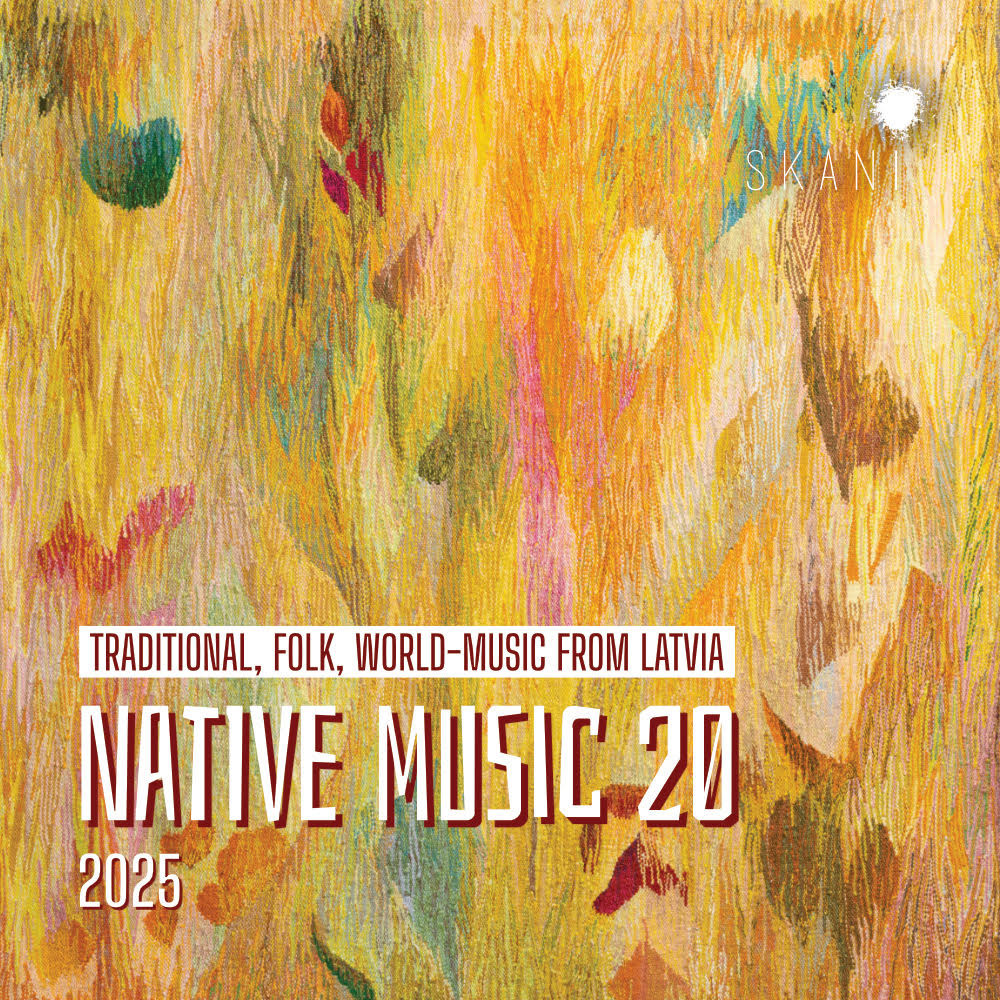
A double dose of folk music. What the selections "Native Music 20" and "Sviests 11" offer
The ambitious world music forum "Womex" has just taken place for the 31st time, in which Latvia also participated for the 20th time, presenting the best and newest that we have in the world, folk and ethno music fields in the Finnish city of Tampere. There were also two song selections in the best and newest category - "Native Music 20" published especially for participation in "Womex" and "Sviests" released every other year, which has now reached the number 11.
The purpose of both compilations is both different and similar. "Native Music" was released by the national record company "SKANi" before the Latvian delegation's trip to "Womex", offering an insight into traditional, folk and world music of various styles, while "Sviesta" is curated by the cultural management center "Lauska", compiling new folk and ethnomusic works created especially for this selection.
This time, both CDs have hit store shelves, the content of which can, of course, also be listened to via streaming, so it's worth checking out both publicly. The songs on "Native Music 20" have been compiled and arranged in a flowing sequence from the genre's recordings released over the past year by ethnomusicologist Lauma Bērza, who is also known as a former member of "Tautumeitu" and continues her active musical activity in a more experimental direction. This, by the way, can be heard in the selection of new ethnomusical works "Sviests 11" compiled by Juris and Daina Zalāns, which ends with Lauma's unusual combination of Latvian and Swedish folk dances "The Fine Line" performed by solo violin.
This is the most unusual piece in the selection, which has usually been even more multifaceted and challenging. This time, the opposite happened – more variety can be found in "Native Music 20", where we hear both typical folk and dance music, a cappella singing, harsher ethno music, jazz elements and even expressions of folk punk. It begins with a polyphonic singing "In the Dark, in the Evening" in honor of the fact that "The Baltic Sisters" represented Latvia at the "Womex" forum this year, becoming only the fifth of our artist associations to have managed to pass the "showcase" concert jury evaluation process.
True, it cannot be considered a Latvian group at all, we are only in the numerical majority - two of the four "Baltic sisters" are Vineta Romāne and Liene Skrebinska, who also plays the kokli. Lithuanian Laurita Peleņūte and Estonian Mariona Selgalla also perform in this folk music supergroup. All four ladies are already well-known personalities in the particular genre. Vineta is also a member of the Latvian Academy of Culture's traditional singing group "Saucējas" and the contemporary folk music group "Laiksne", while Liene sings and plays music in the associations "Bille" and "Sabia". The selection in the singing section also includes the jesters "Ķezbieres" from the folklore group "Vilkaci".
The already mentioned trio "Bille" takes listeners to a more lyrical melancholic mood at "Native Music 20", offering a life contract that is already suitable for dances towards the end of the song "Saule lēca", the experienced duet of double bassist Stanislavas Judins and "Tautumeitas" Asnate Rancāne, who are preparing a new album, and the folk rock band "Kaligo", which has also woven a rock guitar solo into its Līgo song about Jānīte. This time, "Skyforger" manages to do without metal guitar riffs, which even without them can sound like a rough ethno music group, but the union "Grēcīgie partizāni" takes the crowd into a folk punk rock rumble at the end of the selection.
There is also no shortage of more modern and experimental expressions of folk music, offered by "Tautumeitas" with their Eurovision Song Contest hit "Bur man laimi", as well as "Jauno Jāņu orķestris" and the new generation of musicians' associations "Kalnejas" and "Sun Horse". The Latgalian ensemble "Bruoli i Muosys", which released its debut album this year, is tempting in a more ethno-jazz direction, as is Elīna Ose, who is fascinated by Livonian chants in the project "Kuolm randõ" or "Trīs krasti".
The seriousness is sprinkled with a solid dose of energy by the lively "Ogas" with a song about Pēterītis (which, of course, follows the song about Jānītis in the selection) and Katrīna Dynamite, sorry, Dimanta with a composition dedicated to Ūsiņš (which rather stylistically follows the song about Pēterītis). The icing on the cake this time is the introduction of foreign folklore into our folk music by the bagpipe and drum group "Auļi" in collaboration with the Ghanaian singer Abian, which is a precursor to the second international "Voices of Ancestors" project, and the song "Black Rooster Kapelye" from the project dedicated to the collection of Jewish music by Emils Melngailis, not exactly about the black rooster, but about the golden peacock.
The purpose of both compilations is both different and similar. "Native Music" was released by the national record company "SKANi" before the Latvian delegation's trip to "Womex", offering an insight into traditional, folk and world music of various styles, while "Sviesta" is curated by the cultural management center "Lauska", compiling new folk and ethnomusic works created especially for this selection.
This time, both CDs have hit store shelves, the content of which can, of course, also be listened to via streaming, so it's worth checking out both publicly. The songs on "Native Music 20" have been compiled and arranged in a flowing sequence from the genre's recordings released over the past year by ethnomusicologist Lauma Bērza, who is also known as a former member of "Tautumeitu" and continues her active musical activity in a more experimental direction. This, by the way, can be heard in the selection of new ethnomusical works "Sviests 11" compiled by Juris and Daina Zalāns, which ends with Lauma's unusual combination of Latvian and Swedish folk dances "The Fine Line" performed by solo violin.
This is the most unusual piece in the selection, which has usually been even more multifaceted and challenging. This time, the opposite happened – more variety can be found in "Native Music 20", where we hear both typical folk and dance music, a cappella singing, harsher ethno music, jazz elements and even expressions of folk punk. It begins with a polyphonic singing "In the Dark, in the Evening" in honor of the fact that "The Baltic Sisters" represented Latvia at the "Womex" forum this year, becoming only the fifth of our artist associations to have managed to pass the "showcase" concert jury evaluation process.
True, it cannot be considered a Latvian group at all, we are only in the numerical majority - two of the four "Baltic sisters" are Vineta Romāne and Liene Skrebinska, who also plays the kokli. Lithuanian Laurita Peleņūte and Estonian Mariona Selgalla also perform in this folk music supergroup. All four ladies are already well-known personalities in the particular genre. Vineta is also a member of the Latvian Academy of Culture's traditional singing group "Saucējas" and the contemporary folk music group "Laiksne", while Liene sings and plays music in the associations "Bille" and "Sabia". The selection in the singing section also includes the jesters "Ķezbieres" from the folklore group "Vilkaci".
The already mentioned trio "Bille" takes listeners to a more lyrical melancholic mood at "Native Music 20", offering a life contract that is already suitable for dances towards the end of the song "Saule lēca", the experienced duet of double bassist Stanislavas Judins and "Tautumeitas" Asnate Rancāne, who are preparing a new album, and the folk rock band "Kaligo", which has also woven a rock guitar solo into its Līgo song about Jānīte. This time, "Skyforger" manages to do without metal guitar riffs, which even without them can sound like a rough ethno music group, but the union "Grēcīgie partizāni" takes the crowd into a folk punk rock rumble at the end of the selection.
There is also no shortage of more modern and experimental expressions of folk music, offered by "Tautumeitas" with their Eurovision Song Contest hit "Bur man laimi", as well as "Jauno Jāņu orķestris" and the new generation of musicians' associations "Kalnejas" and "Sun Horse". The Latgalian ensemble "Bruoli i Muosys", which released its debut album this year, is tempting in a more ethno-jazz direction, as is Elīna Ose, who is fascinated by Livonian chants in the project "Kuolm randõ" or "Trīs krasti".
The seriousness is sprinkled with a solid dose of energy by the lively "Ogas" with a song about Pēterītis (which, of course, follows the song about Jānītis in the selection) and Katrīna Dynamite, sorry, Dimanta with a composition dedicated to Ūsiņš (which rather stylistically follows the song about Pēterītis). The icing on the cake this time is the introduction of foreign folklore into our folk music by the bagpipe and drum group "Auļi" in collaboration with the Ghanaian singer Abian, which is a precursor to the second international "Voices of Ancestors" project, and the song "Black Rooster Kapelye" from the project dedicated to the collection of Jewish music by Emils Melngailis, not exactly about the black rooster, but about the golden peacock.
Kaspars Zaviļeiskis, Delfi Kultūra, 9.11.2025