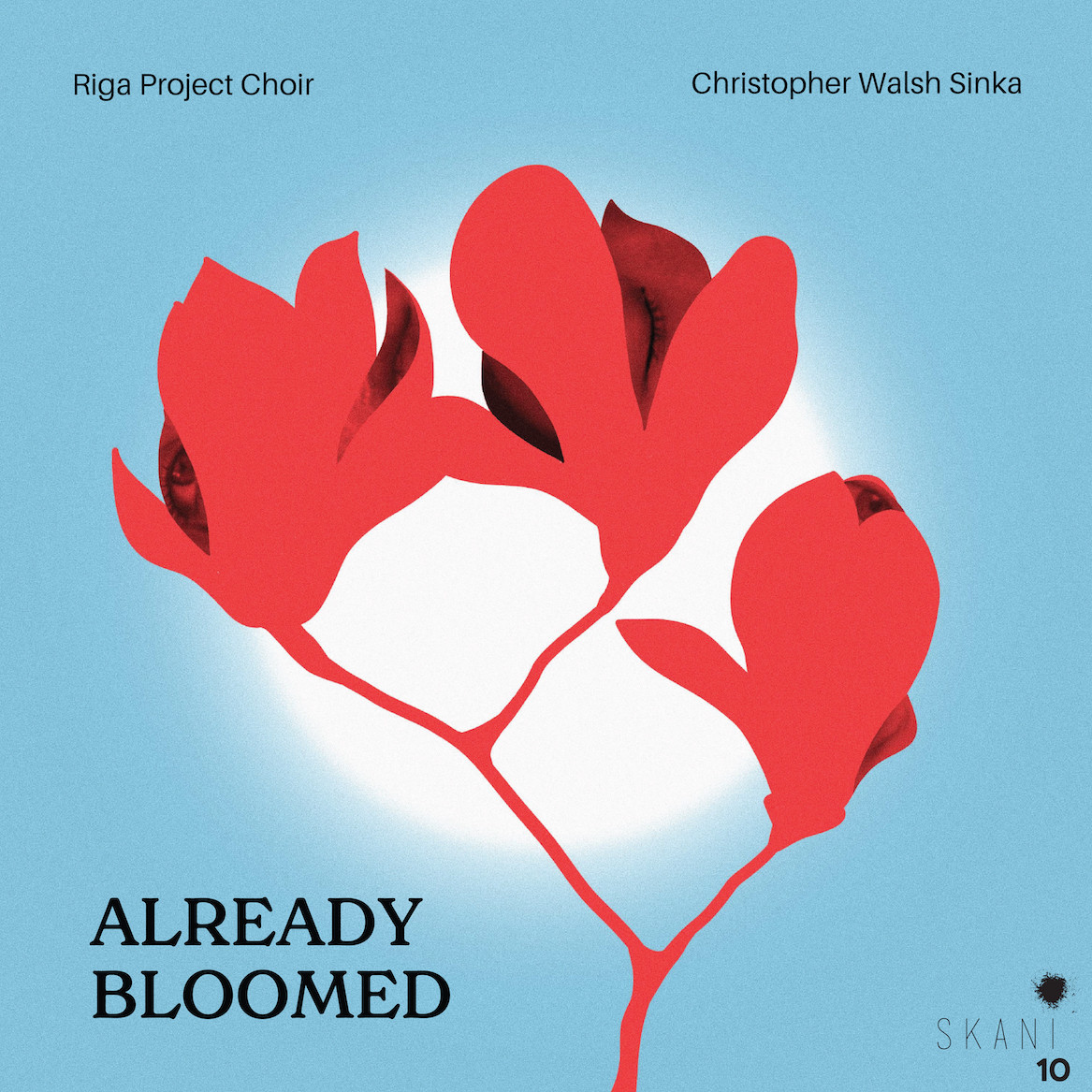
Der Riga Project Choir veröffentlicht das Debütalbum „Already Bloomed“ (dt.: Bereits erblüht) mit Weltpremieren zeitgenössischer Werke für gemischten Chor von verschiedenen lettischen Komponistinnen u.a. Gundega Šmite, Ruta Paidere, Evija Skuķe, Līva Blūma, Lauma Kazaka und Irīna Mihailovska.
In der reichen Geschichte der Chormusik Lettlands standen Komponistinnen ihren männlichen Kollegen in nichts nach und leisteten einen gleichwertigen Beitrag zum Repertoire.
Zu bedeutenden nationalen Persönlichkeiten des späten 19. und frühen 20. Jahrhunderts wie Jāzeps Vītols (1863–1948) und Emīls Dārziņš (1875–1910) gesellt sich Lūcija Garūta (1902–1977). Die Werke von Pēteris Vasks werden in ihrer Bedeutung und Intensität von den Kompositionen von Maija Einfelde ergänzt. Heute teilen sich die innovativen Werke von Andris Dzenītis und Mārtiņš Viļums ihre Position im Repertoire mit Werken von Gundega Šmite und Ruta Paidere.
Dieses Album, in der gotischen St. Johannis-Kirche zu Riga aufgenommen und im lettischen Plattenlabel SKANi erschienen, enthält neue Chorwerke von gleich sechs lettischen Komponistinnen. Der Großteil des Repertoires ist das Ergebnis eines Auftragsprojekts aus dem Jahr 2023, bei dem jede Komponistin gebeten wurde, einen Auszug aus dem Hohelied Salomos aus dem Alten Testament zu vertonen – einer Quelle, die für ihre radikale Herangehensweise an Themen wie Sex, Liebe und Feminismus bekannt ist.
Die Entscheidung, sechs Frauen mit der Komposition neuer Werke auf der Grundlage des Hohelieds zu beauftragen, war bewusst getroffen worden. Texte aus dem Hohelied wurden bekanntlich von bedeutenden männlichen Komponisten wie Palestrina, Schutz und Bach sowie von modernen Komponisten wie David Lang und Daniel Jean-Yves Lesur vertont. Angesichts der prominenten weiblichen Perspektive im Hohelied erschien es jedoch relevanter, herauszufinden, wie Komponistinnen die Texte durch Musik interpretieren würden. Einfacher ausgedrückt: Es gibt bereits genug Kunst, die die männliche Perspektive auf Sex und Romantik widerspiegelt.
Die sechs Stücke, die aus diesem Projekt hervorgegangen sind, werden auf diesem Album durch drei weitere Stücke von Lauma Kazaka, Līva Blūma und Evija Skuķe ergänzt. Jedes dieser Stücke weist Aspekte der Chorkomposition auf, die für Lettland einzigartig sind: schimmernde Texturen, die durch erweiterte Gesangstechniken erzielt werden; traditioneller Volksgesang und Instrumente; und sogar der im Osten Lettlands gesprochene latgalische Dialekt.
Zusammengenommen bietet dieses Repertoire einen Einblick in das, was heute in der Chormusik Lettlands relevant ist.
"KulturPort.De": "CDs KlassikKompass" : Christopher Walsh Sinka, August 6th, 2025
The release of the first album by the Riga Project Choir and conductor Kristofer Walsh Sinka is a wonderful event. Equally valuable is the fact that the repertoire is not made up of a bit of everything, but is instead based on an original programme inspired by the Song of Songs, or Solomon’s Song of Songs, supplemented with several other works by the composers involved. As a result, the names of Evija Skuķe, Līva Blūma, and Lauma Kazaka appear twice. There are also some surprises to be found in each composer’s work: for example, if I normally expect something traditional from Irina Mihailovska and something avant-garde from Līva Blūma, here the outcome tends in the opposite direction — and that is not a bad thing at all.
It is a bit sad that there are still relatively few new revelations. Therefore, when thinking about which works could be included in the repertoires of other choirs, this time again I stop at the achievements of the more experienced authors: Ruta Paidere’s Already Blossomed and Gundega Šmite’s Song of Songs. Yet these are precisely the composers who rely most on the capabilities of the Latvian Radio Choir, which makes things difficult for amateur choirs. And the album’s length — only 43 minutes — once again leads to the conclusion that choosing pieces exclusively by women composers is debatable. In the future, I would encourage not being afraid of including men as well — Aleksandrs Avramecs, Andris Dzenītis, Jēkabs Jančevskis.
Idea ★★★★
Performance ★★★★
Enjoyment ★★★
Armands Znotiņš, Mūzikas Saule, No. 3, 2025
I count myself among the admirers of the Riga Project Choir’s focused and high-quality work. The album that has been released is conceptual both in its choice of musical authors and in the direction of its texts. The composers — all women, with Evija Skuķe, Līva Blūma and Lauma Kazaka even appearing twice. The excellent opus by Ruta Paidere placed at the beginning of the album is not only atmospherically captivating, but also praiseworthy as an intriguing curtain-raiser for the adventure to come (Ruta, please, more and more choral works!). Evija Skuķe presents herself with a vivid arrangement of a Latgalian folk song (I risk suggesting that roots matter) and the angular composition vienu, which is as incisive as the talented author herself. Līva Blūma’s Time Song is a masterpiece. Gundega Šmite’s Song of Songs feels almost too short — in this soundscape one wishes to dive deeper. Some combinations of pieces are especially organic, such as the moment when Evija Skuķe’s Naraudavu seems to arise from Irina Mihailovska’s entirely different opus. I am uncertain about the end of the album — yes, perhaps a harmonious reconciliation is needed, but it slightly dims the preceding impressions.
The choir’s sound is compact in ensemble, stable, and intonationally impeccable. Let us wish Kristofer Walsh-Sinka much success and joy in his work in the future. Without the Riga Project Choir, the circulation of the highest circles of our choral life would be unimaginable.
Idea ★★★★
Performance ★★★★
Enjoyment ★★★★
Orests Silabriedis, Mūzikas Saule, No. 3, 2025
Riga Project Choir: Schwereloser Gesang mit feministischer Aussage
Site to German radio station "WDR 3" broadcast (in German, author Lea Nitsch, lenght 05:36).
December 12, 2025
(Translated from German)
Music: ★★★★⯪
Sound: ★★★★⯪
This album, which at just over 44 minutes in total is brief (but intense!), features choral works by six contemporary Latvian female composers. Although their names – Ruta Peidere, Irīna Mihailovska, Evija Skuķe, Lauma Kazaka, Līva Blūma and Gundega Šmite – are still little known or virtually unknown in this country, they are well worth remembering, as the nine works in total (Skuķe and Kazaka are each represented by two pieces) convey a strong impression of the country’s vibrant choral scene. Most of these are commissioned works, with the request to take the Song of Solomon as their basis and to interpret it musically from a genuinely female perspective. The booklet text, which is well worth reading, puts it with welcome clarity: “There is already enough art that reflects the male perspective on sex and romance.” The sonic result is outstanding in every respect. These highly individual works, yet clearly rooted in the Baltic choral tradition, some with modern echoes of Latvian folklore and sung in the Latvian-Galician dialect, are deeply moving and enchanting – which is also due to the fact that the Riga Project Choir is more than a match vocally for its famous role model, the Latvian Radio Choir.
Burkhard Schäfer, FONO FORUM, May 2026 issue