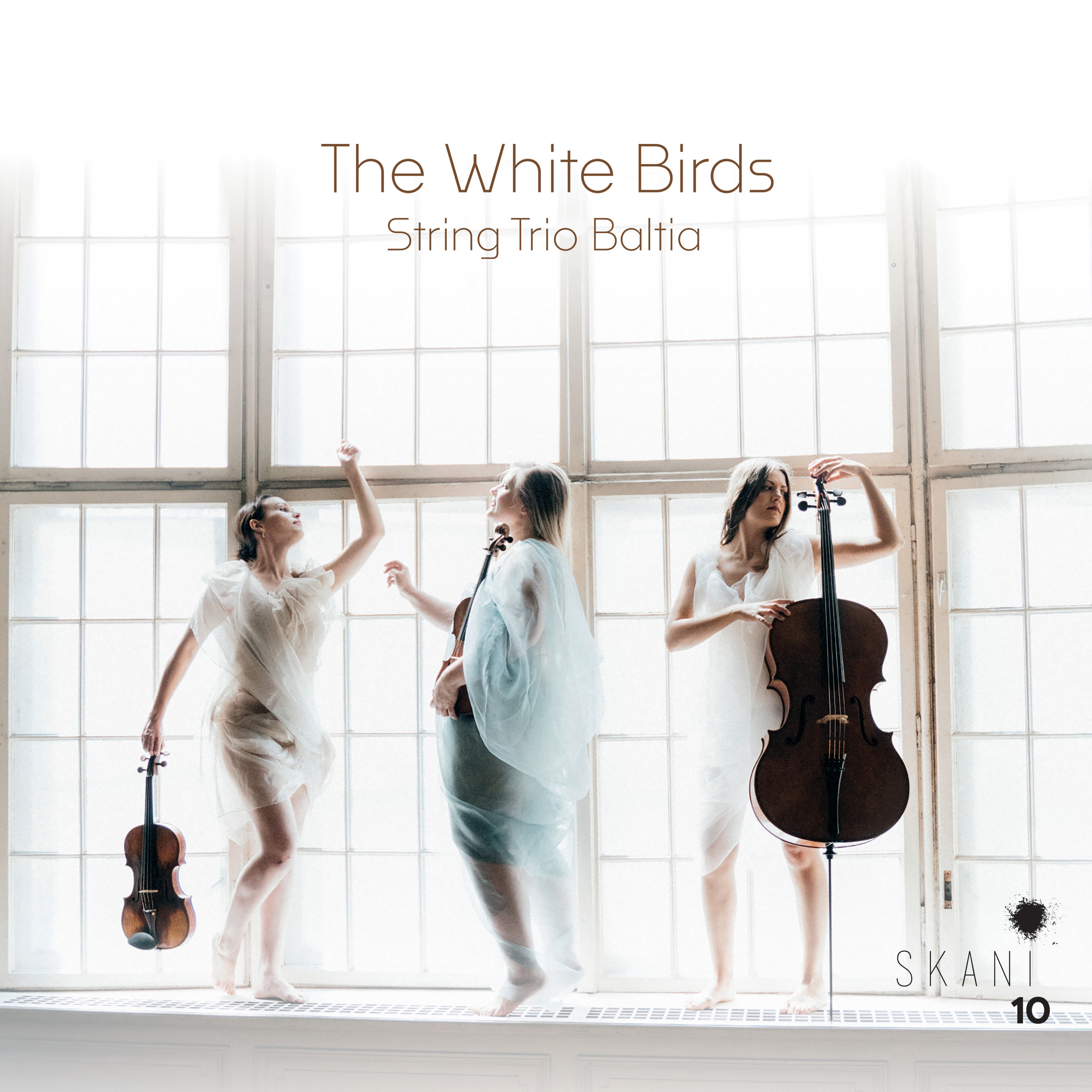
The name ‘Trio Baltia’ is cleverly chosen! However, it is not explained in the booklet or on the ensemble's website, which is unfortunately only available in Latvian. But if you google the word ‘Baltia’, you will learn that it has several meanings, all of which are appropriate for the trio and its album. According to Wikipedia, since ancient times it has referred to the legendary Amber Island; it is also believed to refer to the island of Zealand (Sjælland), from which the word ‘Baltic’ was derived. The romantic philologist Johann Kaspar Zeuß even claimed that “Baltia” translates into German as ‘white’. The fact is that the three Baltic women play through the lightest of all colours in the title track of their debut album ‘The White Birds’ (2023-24) by Gundega Šmite in a congenial manner. Its four movements explore the sound world of four white birds – the mute swan, the collared dove, the seagull and the white stork – and they do so in such an (not only) onomatopoeic way that you can almost feel the birds flying above and beside you. This new ‘Catalogue d'oiseaux’ is breathtaking and the highlight of the CD. But the other works are also impressive: ‘Castillio interior’ by Pēteris Vasks is a musical journey in which the soul must first pass through seven castle courtyards before reaching God. The sombre “Gran duo funebre” (1987) by Gundaris Pone was written shortly before the fall of the Iron Curtain and, like the 8th String Quartet by Shostakovich to which it refers, is a piece of mourning. The Trio Baltia proves that it is also at home in absolute music with Tālivaldis Ķeniņš' simply titled ‘String Trio’ (1989) – another exciting discovery on this thrilling album.
"Musik & Theater", 07.2025
Andrew Mellor kritika "Gramophone" 2025. gada septembra numurā - LASĪT